
Losing weight in perimenopause. 10 things that I am doing. None of these are fun. All of them are necessary.
That is the most honest thing I can tell you before we get into it. If you came here looking for an easy answer or a supplement that does the work for you, this is not that post. But if you are in perimenopause, frustrated that nothing is working, and ready to hear what is actually making a difference for a real 54 year old woman doing the work in real time, keep reading.
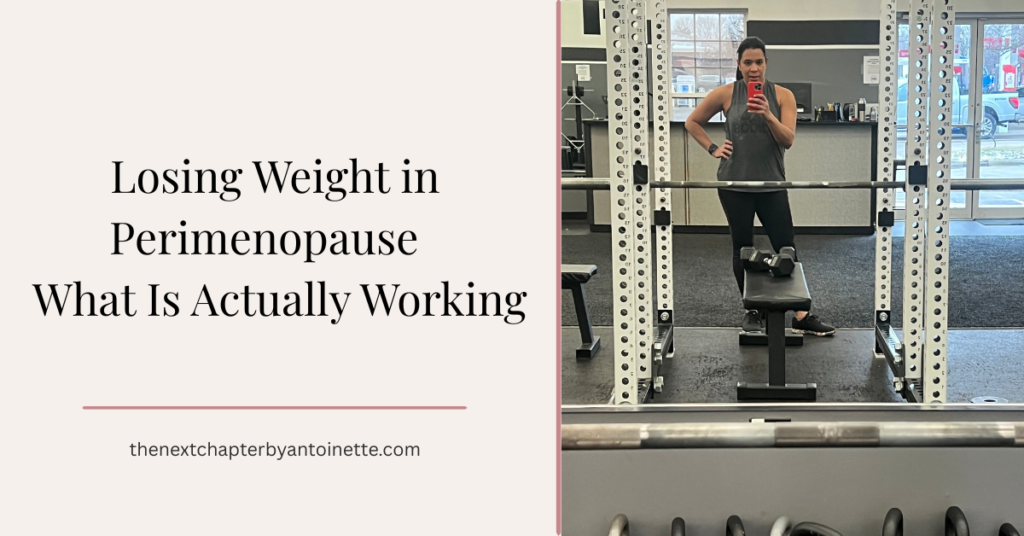
I gained 20 pounds in perimenopause. I tried the old ways first. Eat less, do more cardio. It did not work. My hormones had changed and my approach needed to change with them. Everything on this list is something I am currently doing. Not something I read about. Not something I tried once. Something I do consistently, imperfectly, and with real results building over time.
1. Hot or Lukewarm Water With Lemon First Thing in the Morning
Before coffee. Before food. Before anything. I drink a glass of hot or lukewarm water, sometimes with lemon, sometimes without. This one is simple and I was skeptical at first but it has become non negotiable for me. It gets your digestion moving, helps with bloat, and starts your body off hydrated before you have even eaten anything. It takes thirty seconds and costs nothing. Start here.
2. Strength Training Four Days a Week and Cardio Three Days
This is the biggest shift I made and the most important one. I used to think cardio was the answer. Run more, burn more, lose more. That is not how perimenopause works. Your body needs muscle now more than it ever has. Muscle protects your metabolism, your bone density, your mood, and your long term health.
I strength train four days a week and do cardio three days. But here is what I want you to understand about strength training. It does not just mean weights. I do one day of pilates as part of my weekly strength rotation and I want to be very honest with you, pilates is harder than I ever expected. It uses your bodyweight and resistance in ways that will humble you quickly. It is worth it.
For cardio I mix it up between running and biking. I use the Peloton app to guide my workouts and I see a trainer one day a week. Having that external accountability is something I do not think I could do without right now.
3. Walking at Least 10,000 Steps a Day
Walking is not optional for me anymore. It is medicine. I aim for 10,000 steps minimum every single day and if you are not there yet start where you are and build. You will be surprised how quickly your body adapts and how naturally you start finding ways to add more movement into your day.
The thing that changed everything for me was walking after dinner. Even just fifteen to twenty minutes. It helps your food digest faster, reduces that heavy bloated feeling after eating, and has become one of my favorite parts of the day. On days when I cannot get outside I use my walking pad at home.
On my walks I wear a weighted vest. Adding resistance without adding joint stress has made a noticeable difference in how my body responds to what would otherwise just be a casual walk.
4. Making Protein and Fiber a Priority
I shoot for 150 grams of protein per day. That sounds like a lot and it is. It requires intention. It requires planning. And it is one of the most important things I do for muscle retention, appetite control, and body composition.
Fiber is right there with it. Between the two of them they keep me fuller longer, support my digestion, and help me stay on track with my overall intake. If you do not know your protein target use the TDEE calculator online to figure out your calorie needs and work from there.
5. Tracking My Food
I avoided this one like it was my job. It felt like one more thing to do and I did not want to do it. I was wrong.
No matter how much you think you are eating within your calorie target you are probably eating more than you realize. My trainer has me tracking everything. Every ingredient in every meal. Not just the main components but everything that goes in.
What I learned from doing this was uncomfortable and useful. I was not eating enough protein. I was eating more calories than I thought on several days. And I started noticing patterns in my eating that I had never seen before because I had never actually looked.
I am still working on being consistent with this. I will not pretend otherwise. But the days I track are the days I make better decisions and that is enough of a reason to keep going.
Use a food scale. It removes the guesswork entirely. Use the TDEE calculator to find your maintenance calories and your deficit target. Then track against that number every day.
6. Building a Sleep Schedule
Sleep is not passive recovery. It is active weight management. When you are not sleeping your cortisol spikes, your hunger hormones go haywire, and your body holds onto weight in ways that have nothing to do with what you ate. Perimenopause already disrupts sleep. You have to be intentional about protecting it.
I am working on going to bed and waking up at the same time every day including weekends. I track my sleep with my Apple Watch so I can see what is actually happening versus what I think is happening. And I take supplements specifically to support sleep quality. This is still a work in progress for me but it is on the list because it matters enormously.
7. Limiting Alcohol
I am not going to tell you I have given up alcohol because I have not. But I am honest with myself about how much I was consuming and what it was doing to my sleep, my recovery, and my progress.
My weekend wine habit has changed significantly. If I have a drink now it is more likely to be a tequila and soda than a glass of wine. Lower sugar, lower impact, and I can still enjoy a social moment without derailing everything I worked for during the week. Alcohol affects your sleep quality, your cortisol levels, and your body’s ability to burn fat. That does not mean you can never have a drink. It means you need to know what it costs and decide accordingly.
8. Supplements Every Single Day
Two that I take without exception are collagen and creatine. The research on creatine for women over 40 is compelling enough that I will not go without it. It supports muscle retention, brain function, and energy. Collagen supports my skin, my joints, and my connective tissue which matters a lot when you are training hard and have a history of injury like I do.I have linked everything I currently take in my Amazon storefront perimenopause wellness list if you want to see exactly what I use.
9. Drinking a Gallon of Water a Day
A gallon. Every day. I know that sounds like a lot. It is a lot. But hydration affects everything from your metabolism to your skin to your energy levels to how your body processes food. I start with hot water in the morning and work my way through the rest of the day from there. Get a large water bottle you actually like carrying and make it a habit.
10. Incorporating Recovery
This one took me the longest to take seriously. Recovery is not a reward for working hard. It is part of the work. Stretching, yoga, and infrared sauna are all part of my routine now.
I go to Perspire, an infrared sauna studio, at least once a month. If you have never tried infrared sauna I cannot recommend it enough. The way it supports muscle recovery, sleep, and overall stress levels is something you have to experience to fully appreciate. It has become something I genuinely look forward to.
You cannot train hard, sleep poorly, skip recovery, and expect your body to respond. All of these things work together. None of them work in isolation.
The Honest Truth
I am not done yet. The 20 pounds are not all gone. This is a process that takes longer in perimenopause than it ever did before and anyone who tells you otherwise is not telling you the whole story.
But I am stronger than I have been in years. I understand my body better than I ever have. And for the first time I am working with my hormones instead of fighting against them.
Save this post. Come back to it. And if you are in the thick of perimenopause and feeling like your body has turned against you, know that it has not. It has just changed the rules. And now you know what the new rules are.